Posts

Showing posts with the label garage

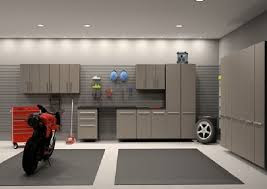
Garage Lighting

Image
Remember when everyone tried to get us to buy those stupid compact fluorescent lights? Before that we had those really dumb incandescent bulbs that only used about 10 percent of the electricity for creating light. Those old incandes cent bulbs did a much better job at providing heat than they did at providing light. Today it’s all about Light Emitting Diodes or what we call LED lights. Kevin Doughty, who works in product development for Home Depot, points out “ LED light fixtures are digital products, much like our cell phones and TVs.  As performance improves, costs come down.   We are now at a point where the quality and reliability of LED fixtures are at or exceeding the performance of traditional light sources. Additionally, you can make up for the upfront investment in less than a year – especially as many LEDs solutions are nearing the same initial cost of fluorescents.” The Temperature of Light We measure light temperature in Kelvins. If you want the inside of your shop...
Crankshafts

Image
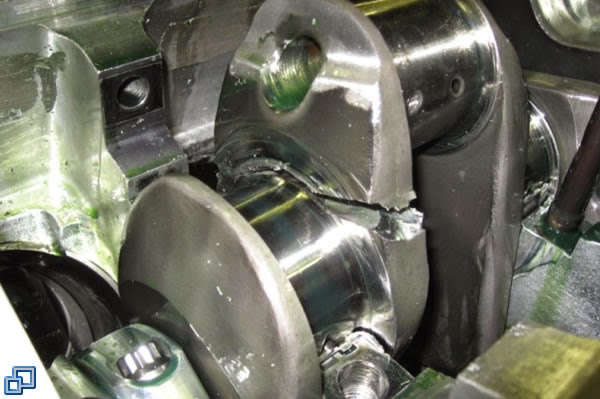
Your crankshaft goes from 0 to 3000 rpm in about two seconds. When the air fuel mixture expands in the cylinder head it forces the piston and connecting rod down into the crankshaft. At 8,000 rpm it does this 4,000 times a minute. The  crankshaft only appears to be rigid. It isn't. Anytime a load is applied to a part the part deflects. All  parts ultimately act as a spring in response to a load. In the case of the crankshaft that movement will be very small but it will be intense. It will also happen very quickly. When the engineers designed your engine they did a lot of calculations and they created a crankshaft that could withstand all of these forces. Now decades later you’re changing everything. You’re trying to get more horsepower out of your old engine, which blows up all those original calculations. You’re applying a lot more stress than the designer ever envisioned. And, you’re asking a fifty-year old part to do this. Maintenance Schedule: Tom Lieb, founder of Scat Cra...

Climate Control for Your Collection

Image
We all worry about road damage when we take our cars out for a drive but a lot of the damage to our cars comes from the place where we have them stored. Remember that the first rule of collecting is that you should do no harm. This means we need to pay a lot more attention to the environment where our cars reside when they're not being driven. Before you spend a lot of money determine what current conditions exist. A data logger can save you a lot of money. Talk to your HVAC specialist about ducting systems Stabilization: Restoration is a type of conservation. It refers to an attempt to bring a cultural property (your car) closer to its original appearance. Restoring a car means taking it back to the way it was originally constructed.  Conservation is slightly different. It should really be thought of as stabilization. Conservation is an attempt to maintain the integrity of a cultural property by minimizing deterioration. The primary goal of conservation and preservation is t...