Posts

Valve Train

Image
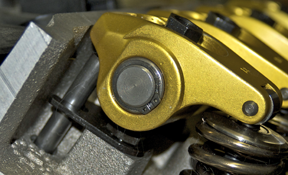
It’s all about the rpms. If our engines turn 7,500 rpm we would love to get to 8,000. If we run 8,000 down the back straight we want to get to 9,000 rpm. Every additional 1,000-rpm may be worth an extra 20 or more horsepower on a highly modified performance motor.     Spin an engine faster and it will, in most cases, make more power. The standard example is F1. Today’s F1 engines make roughly the same amount of power as they did 10 years ago – at 10,000 rpm. The difference is that today they go to 18,000 rpm. The additional horsepower comes from increased rpms. Increased rpms come from stabilizing the valve train. Most of the vintage cars in the paddock use pushrods and rocker arms in the valve train. In the United States we have a huge industry focused on making overhead valve engines with pushrods perform better. Everything NASCAR does is dedicated to this technology. Can an MGA benefit from what they’re doing in NASCAR? Of course.   Your MGA has the same basic valve ...

FIA Historic Rules

Image
Is Historic racing about racing vehicles as they existed when they were contemporary or is it just an opportunity to race old cars? Vintage racing has been a great example of technological creep. At one time a 1969 Porsche 2.0 911 was limited by 1969 technology. Today that 1969 Porsche 911 is reaching speeds never imagined by the original designers. It didn’t happen all at once. It evolved over the years. First it was the adjustable shocks, and then came the MSD ignition box followed by wider wheels. Each one of those items was insignificant. But as the technological creep moved on the cars got faster, the costs got higher and the car count got smaller.   The FIA, or Federation Internationale de l'Automobile, has a set of rules for historic racing cars and these rules don’t change every year. Historic racing cars in most of the world must have FIA papers in order to compete at larger events (plus some selected smaller ones too). These rules provide an internationally accepted set ...