Posts

Harmonic Balancers

Image
Every time the cylinders in your engine fire torque is imparted to the crankshaft. The energy that is transferred from the piston to the crankshaft can induce as much as 2 degrees of twist in the crankshaft. A harmonic balancer is mounted on the end of the crankshaft to help dampen this twisting.     Harmonic balancers are typically constructed in three pieces. The first piece is often called a hub. It bolts to directly to the crankshaft. This hub is then wrapped in rubber. The outside, or third layer is a heavy metal. This outer layer generally has grooves on it for the drive belts. The pliable rubber middle ring is what dampens the crankshaft vibrations. As the crankshaft accelerates this rubber will twist and allow the mass of the outer ring to lag slightly behind center of the damper. When the crankshaft snaps back to it’s original configuration the mass of the harmonic balancer cancels the harmonic. By calculating the precise characteristics of the engine and sizing the ...

Air Filters

Image
Everyone claims their air filter flows best, and at the same time removes the most dirt. Think about this. A solid piece of metal will prevent dirt from entering your engine, but it won't flow any air. On the other hand the screen used on your bedroom window will flow a lot of air but won't catch much dirt.              There are really three goals involved in air filter selection.  - Provide maximum airflow. - Protect against airborne dust particles. - Perform efficiently when dirty. You should try to use an air filter that traps  particles  over 10 microns. A grain of sand is roughly 50 microns. BMC, who builds a lot of the air filters used in F1, claims they have filters that can trap 7-micron debris and still flow efficiently. Most of the air filter manufacturers though are very reluctant to share this information. K&N told me that it was proprietary information and they were not about to tell me what micron levels their filters ...

Garage Lighting

Image
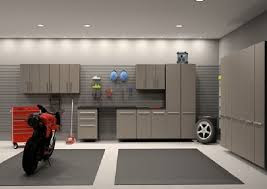
Remember when everyone tried to get us to buy those stupid compact fluorescent lights? Before that we had those really dumb incandescent bulbs that only used about 10 percent of the electricity for creating light. Those old incandes cent bulbs did a much better job at providing heat than they did at providing light. Today it’s all about Light Emitting Diodes or what we call LED lights. Kevin Doughty, who works in product development for Home Depot, points out “ LED light fixtures are digital products, much like our cell phones and TVs.  As performance improves, costs come down.   We are now at a point where the quality and reliability of LED fixtures are at or exceeding the performance of traditional light sources. Additionally, you can make up for the upfront investment in less than a year – especially as many LEDs solutions are nearing the same initial cost of fluorescents.” The Temperature of Light We measure light temperature in Kelvins. If you want the inside of your shop...